
Bio: Hi! I’m Milana Krishnevsky, a junior Biology and Environmental Studies double major at Macalester College. I like botany and ornithology, and hope to conduct plant-focused climate change research in the future. In Alaska I researched willow leaf decomposition in stream ecosystems through a Research Experience for Undergraduates (REU) mentorship with the EvoMe Institute.

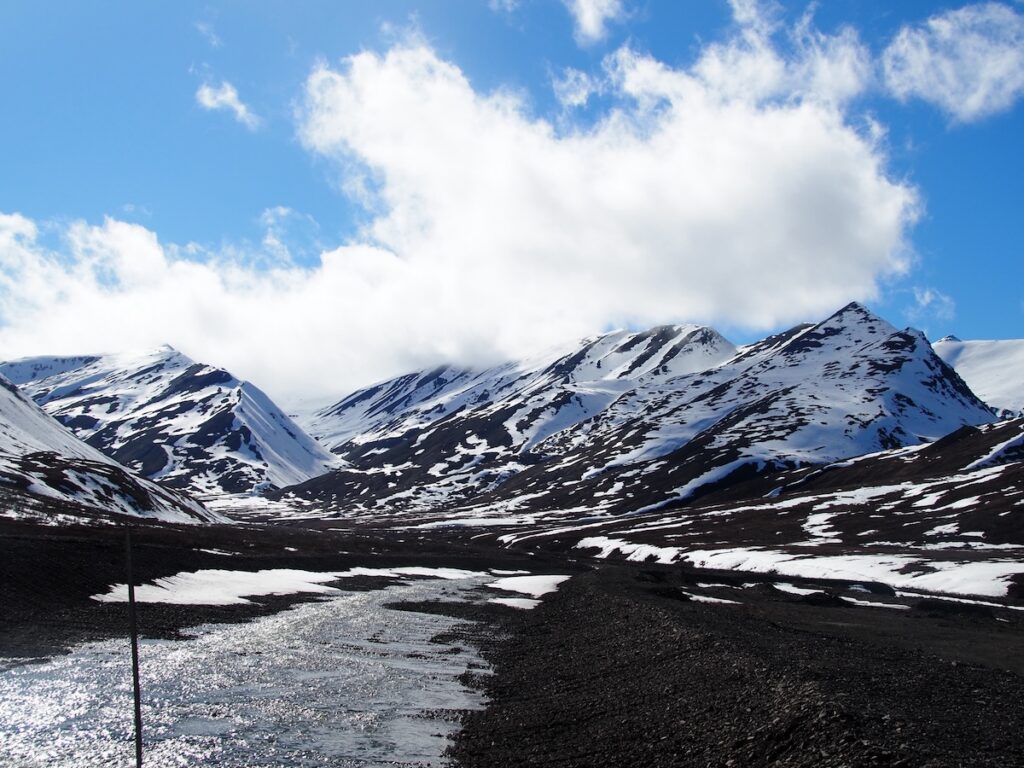
Since I first learned I got the position, I was both excited and a bit apprehensive to spend my first summer as an undergraduate research assistant in Alaska. Prior to my arrival, many warned me about the flexibility field research requires: nature always makes the final decision on the day’s schedule.
My first week at the field station fulfilled these expectations perfectly. Hiking out to streams only to find the water too high to work in became the norm. But as the weeks went by, I found an undercurrent of stability within the chaos of fast-paced work, weather-induced field day adjustments, and longer-than-predicted work days. I found stability within both the work and the nature we saw along the way.
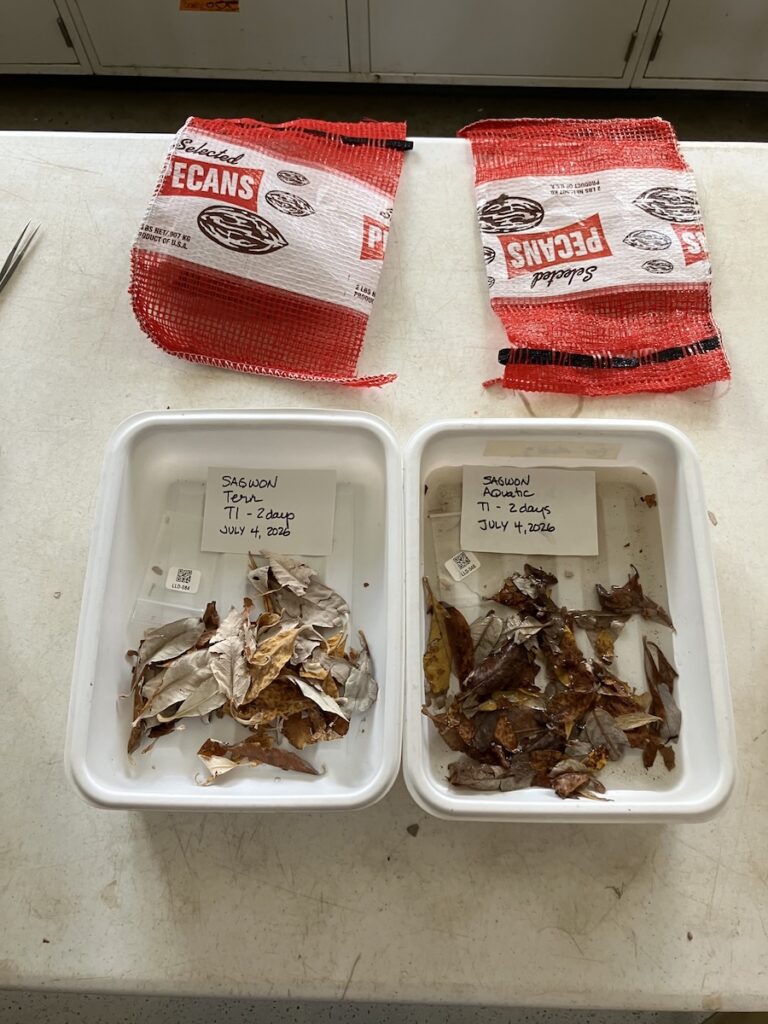
The most stable element for me was perhaps the constant flow of work. On days when the water was too high or thunder forced us out of the field, we could reliably find indoor work to do: preparing litter bags for deployment, processing willow leaf samples in the lab, or helping out on other projects within the EvoME Institute.
While helping other Krewes (our fun Mardi Gras themed way of referring to groups) within the EvoMe Institute, I got to learn what they did as well. My favorite was joining a week-long expedition south with the Bug and Fish Krewes. There, I became well-versed in identifying insect larvae and sorted innumerable midges and mayfly larvae. I got to watch the Fish Krewe perform heart function measurements on Arctic grayling and mist net white-crowned sparrows with the Bird Krewe. In the span of one summer, I learned multiple internships worth of skills and understood how different areas of ecology interact with one another, even using my experiences with the Bug Krewe to identify bugs in my litter bags.
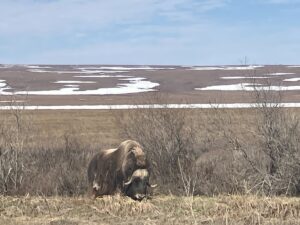
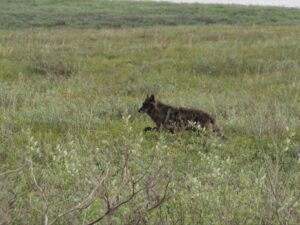
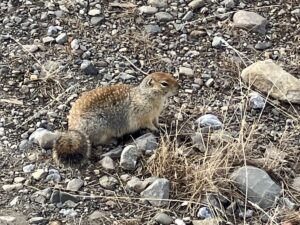
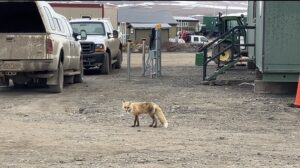
Photos 3-6: Muskox, wolf, ground squirrel, and fox encountered in the field and at base camp. Photos: Milana Krishnevsky.
Outside of the work itself, encounters with wildlife became another stable aspect of fieldwork. Every day in the field, we could expect to see many a bird fluttering about in the willows we study. On the lucky days, we’d see a wolf cross the road or encounter a fox running through the tundra. However, my favorite wildlife sighting was always the muskox. The whole summer, they would hang around the same bend of a nearby river, trampling through the willow trees and living their muskox lives. Early in the summer, we saw two babies within the herd, quickly named Hamburger and Hotdog by a fellow researcher. The remainder of the summer, we watched Hamburger and Hotdog grow up.
Looking out the dining hall window on my last day at the field station, I was impressed by how quickly the summer passed and how much I had learned. The day after I left, the grass that turned green during the summer was once again covered in snow. A new season started, but the fieldwork experience that I gained this summer will stay with me as I start a new season within my own research experiences.