The Move
The more that I dive into fisheries, the more I realize that my life and that of fish share more overlap than I’d like to admit. Being part of an immigrant family, pressure to change and migrate are familiar stressors. My parents helped with the move to Fairbanks and on our journey I got to see them experience a sliver of childlike wonder and innocence. As we approached the Alaska border, their eyes retold the story of crossing into the United States. Thirty years ago my parents entered the United States and now thirty years later they were reentering the country, only legally this time.
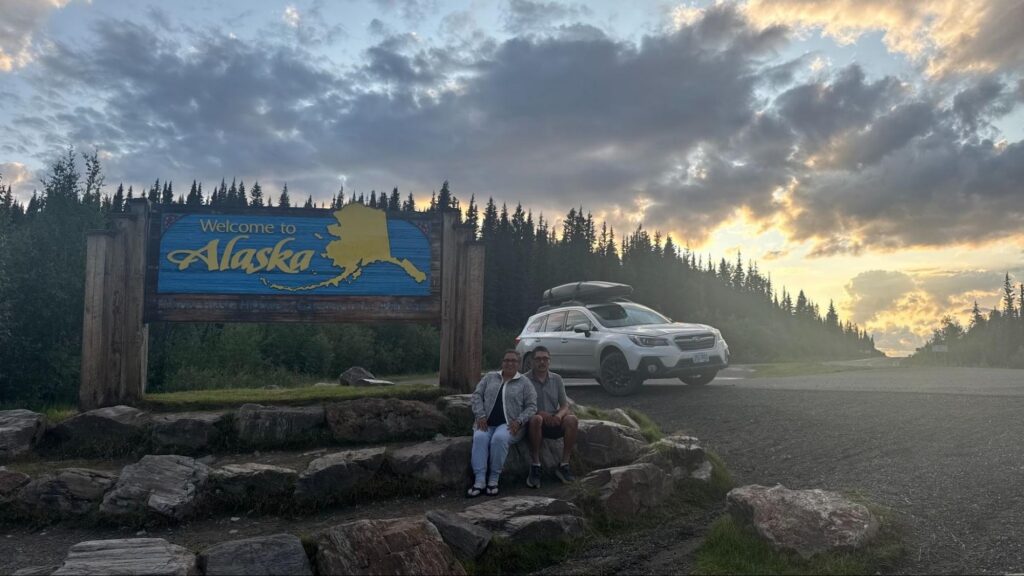
“You probably didn’t expect this far north when you told your parents you were going north,” I said. Laughter has a way of easing tension.
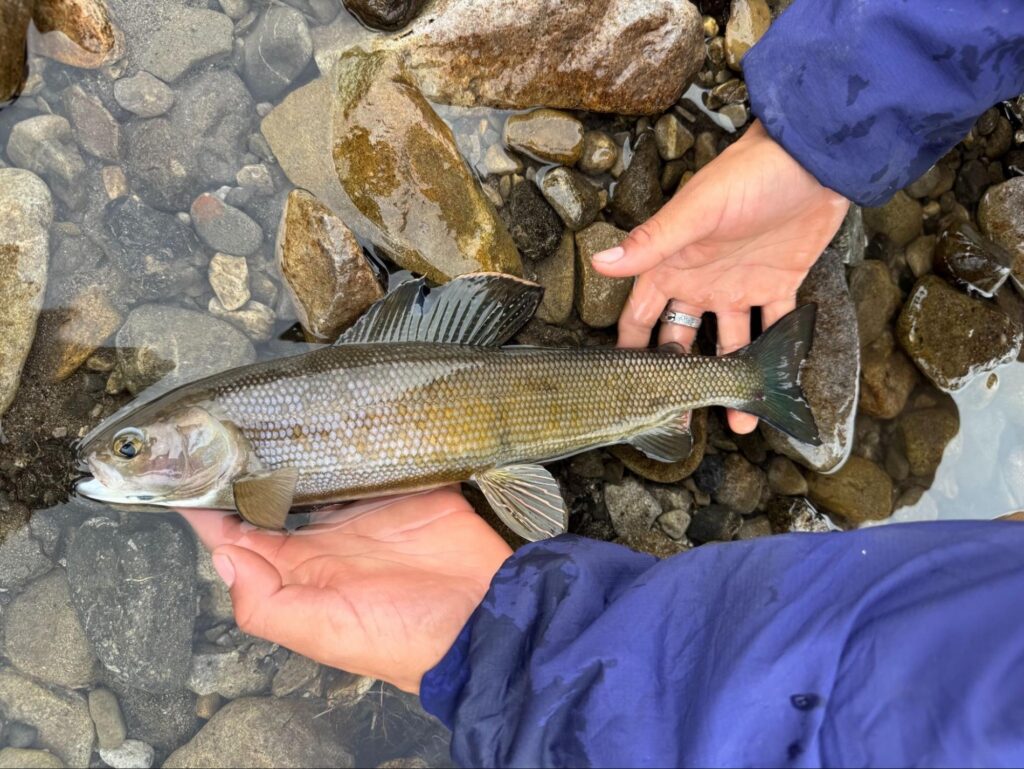
I, too, never thought I would venture this far north. I find that I have an exceptionally hard time doing anything casually, and my love for fish and ecology is no exception. Stubbornness in both fly fishing and fisheries work has propelled my journey through this field. Getting to study Arctic grayling (Thymallus arcticus) as a model for understanding changing ecosystems in the Arctic, how could I refuse? If there is a lesson I carry from observing fish, it’s that they too know how to return to the natal streams that bore them, only with far more than what they initially left with.
Toolik & The Fish
On July 8th, 2025 I was shuttled up the bumpy haul-road and arrived at Toolik Field station. As the dust of the truck still settled I was introduced to my lab and project mates. The following morning I woke to tussocks and fireweed sticking out like loose threads of a snowy blanket.
I met with Matt, my labmate, and we set out in search of grayling. Finding adult Arctic grayling was simple: if they were there, we were going to catch them. If they were not, it was either the wind or the water or the gear. In true fly-fisher style, we were never at fault. Adult fish were anaesthetized, measured from snout to fork-length (where the tail forks), weighed, had their stomachs pumped, and then were euthanized. Fish were then cut up to collect tissue samples for the genetics team. We initially struggled to find the young-of-year (newly emerged) grayling, but then quickly began to find them as they emerged. What caught my attention was the variation in body size, with some streams producing both big and small individuals. Interesting…

Over the summer field season, Arctic flowers bloomed and wilted and my relationship with grayling grew. Arctic grayling are notorious generalists, though what choice do they have? Following harsh winters spent in deep water that doesn’t freeze to the bottom, they migrate to spawning and summering grounds before making their journey back to overwintering habitat. They do not imprint on streams like their salmon relatives, yet they often return to prior spawning and feeding locations. Eggs laid in the spring hatch 1-3 weeks post-fertilization, with young feeding and allocating energy for their migration to overwintering sites. Experiencing grayling has given me a new way to understand something I have experienced myself. It is tumultuous environments, like the Arctic, that expose the criticality of plasticity, and at a greater scale, adaptation.
Upon release, I like to think that the grayling and I exchange a look of respect – one that says: I may not know, but I understand.
Pulses
Upon packing for my Toolik departure, I realized the irony of my raincoat. I brought it everywhere and yet I rarely used it. Like data collection, or extra food and water in the work truck, it was always better to have it and not need it. Lest it start raining, it’s best to be prepared for the pour.
And then one day it began raining. Or rather, it poured on us. But I am familiar with the pulses; watching my hometown creek fill and flush as the altered channel overflows from springtime shoulders and autumn angst, reminding me of how one drop can be the difference between a spill and a flood. Another lesson I hold dear. So feeling the clouds of the tundra spool and spit upon us was no surprise but rather an invitation. Science, in all its facets, behaves like water caught in currents of ebb and flow and comes in similar pulses. At times we struggled to find fish and then we’d get hit with more than we could catch. What mattered was keeping our rods and notebooks at a moments ready.
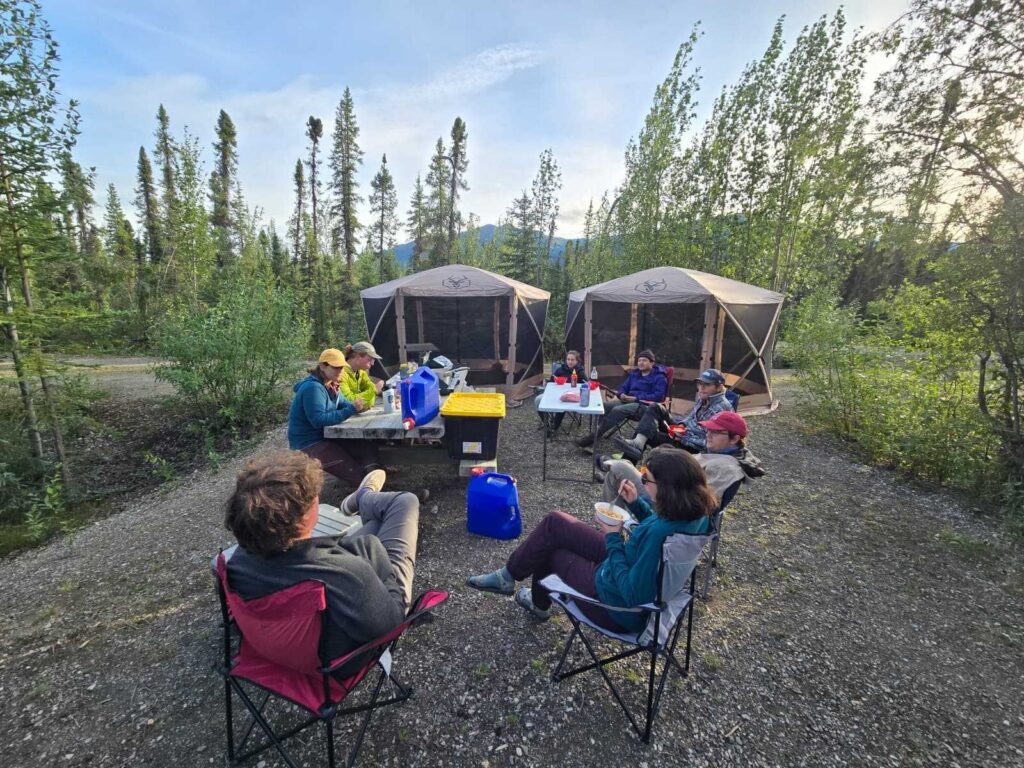
When these storms settled, I was always left grateful for the comradery and support of my EvoME peers who make ripped bug-shirts, long work days, lactose intolerance, or forgetting a coat when it does rain something to laugh about. These moments, along with the science, continue to reinforce the importance of community interactions on an ecological and human level and remind me of why I made the migration to Alaska.